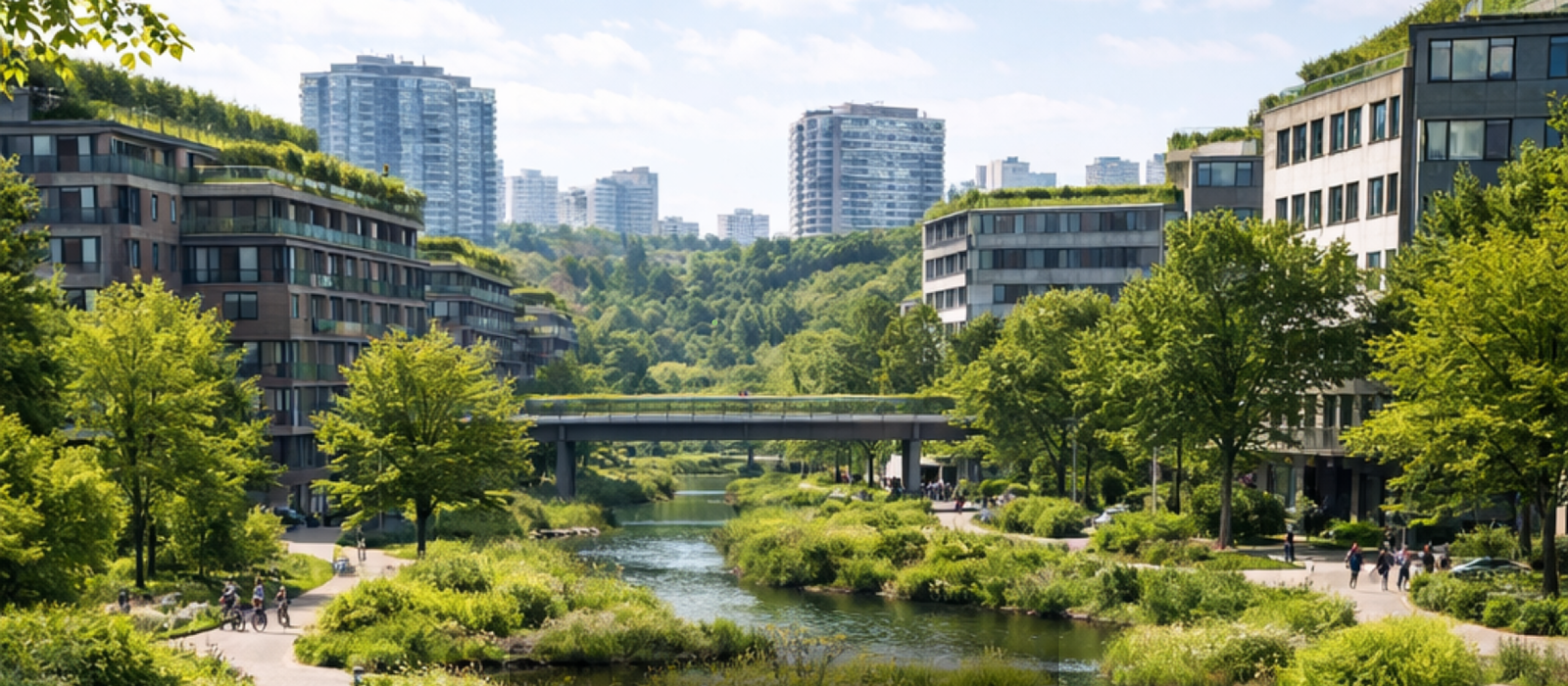
Earth Day - Sustainable construction, lasting value
Sustainable construction is not only an environmental issue but an economic one as well. Energy efficiency, conscious water management and a life-cycle approach can together help ensure that our buildings remain more valuable, more economical and more responsibly operated over the long term.
Earth Day reminds us every year that sustainability is not a future objective but a present-day responsibility. The decisions made by investors and property owners determine a building’s energy demand, environmental impact, operating costs and adaptability for decades to come. Today, it is no longer enough to think only in terms of new, modern buildings. It is equally important to consider what we do with what has already been built.
Green retrofit offers an answer to this. It is a conscious renewal process designed according to sustainability principles and built on the existing values of a building. In such cases, the goal is not merely aesthetic improvement, but also enhancing energy efficiency, reducing material and resource use, rethinking functionality and extending the building’s lifespan. In most cases, the most sustainable decision is not demolition and new construction, but preserving and upgrading the existing structure.
- Energy efficiency: Well-chosen façade and building services solutions, shading, thermal insulation, modern windows and doors, heat recovery, intelligent controls and building automation together deliver significant results. The use of renewable energy sources is now not only an environmental obligation but also an economic rationale. A well-designed system makes operations more predictable and cost-effective in the long term, while reducing external energy dependency and significantly increasing the value of the building.
- Water management: A sustainable building also uses water consciously. Keeping and reusing rainwater on site, water-saving systems, greywater reuse, thoughtful landscape design, expanded green areas and water-retention solutions all contribute to making a property more economical and at the same time more pleasant to live or work in. Water management is no longer a side issue, but one of the foundations of climate-adaptive design.
- We need to think in terms of the full life cycle. LCA, or Life Cycle Assessment, helps us look not only at the moment of construction or reconstruction, but at the whole picture: what materials are incorporated, how resource-intensive the construction process is, and how much waste is generated. But the operational phase is just as important: energy and water consumption, maintenance needs, replaceability of components, durability, what happens to the building decades later, and how well it can adapt to future needs.
For investors and property owners, perhaps the most important step is to ensure that sustainability is not treated as an afterthought, but is already considered during the preparation of investment decisions. A sustainability-focused assessment of the building, a well-prepared refurbishment strategy, or, in the case of a new development, a timely life-cycle-based optimisation, will create advantages not only from an environmental but also from a business perspective. Sustainability is no longer an extra commitment, but one of the basic conditions of a property that remains valuable in the long term.
On Earth Day, it is especially worth reminding ourselves that through responsible decisions today, we can simultaneously improve the quality of our built and natural environment, the comfort of users and the financial return on investment.
We help our partners ensure that sustainability considerations appear not only as theoretical goals, but become tangible, actionable steps in real estate development and operational decision-making