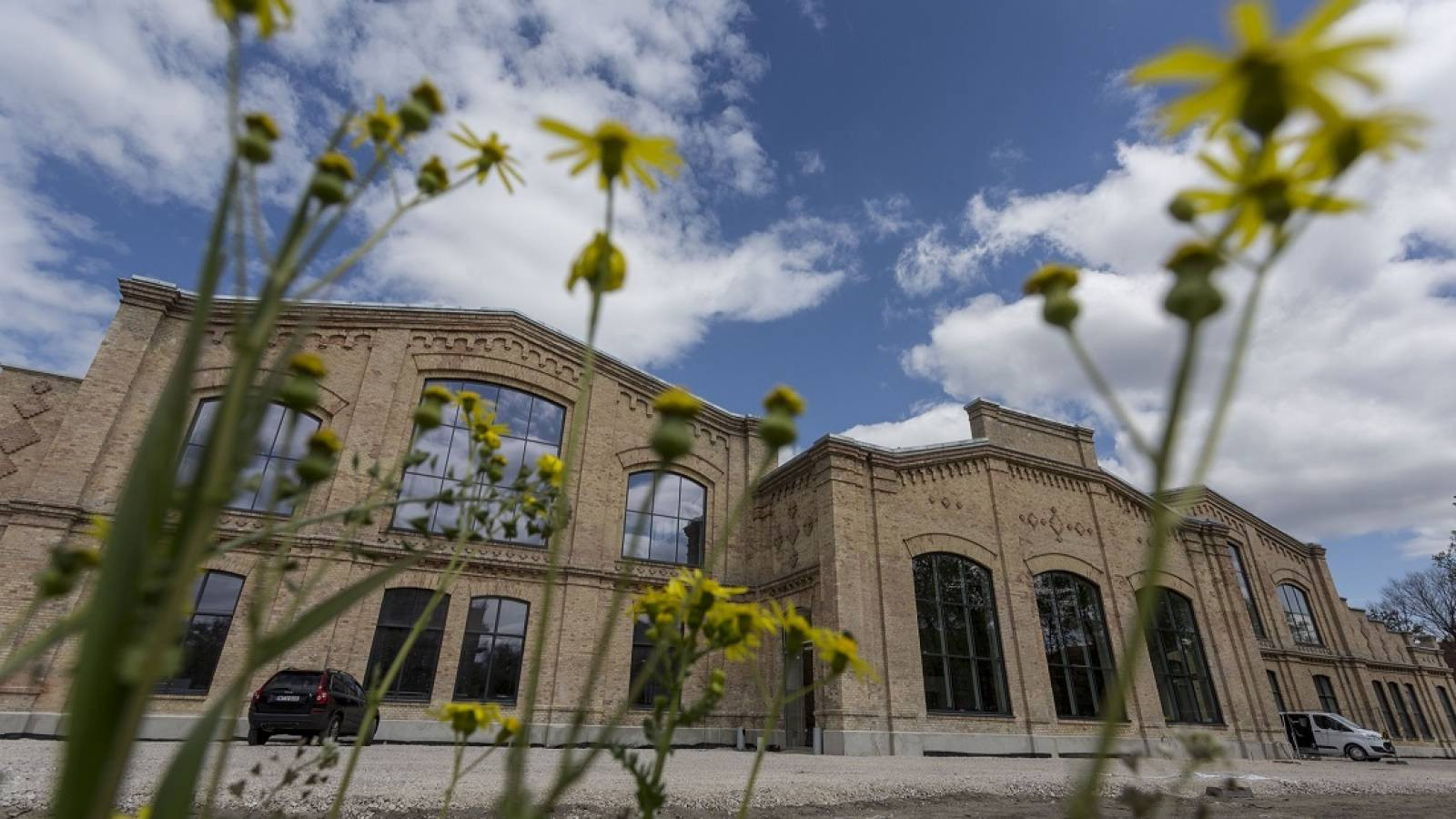
Demolish or “reinterpret”?
In the ESG era, deep renovation may give the construction industry a “green light”
Roughly four-fifths of Europe’s building stock is expected to still be with us in 2050 – the year set for achieving EU climate neutrality – while around three-quarters of properties are already not energy-efficient enough today. EU climate neutrality targets, sustainability expectations, and business imperatives are increasingly pointing in the same direction: modernization is essential. For construction professionals, the big question remains: demolish and rebuild, or preserve and modernize?
The hidden cost of demolition
“Demolition is not only a financial but also an environmental burden, yet the difference in the carbon balance between demolition and reconstruction is still not given the priority it deserves. The carbon dioxide bound in existing structures is released one way or another during demolition, and new construction once again requires significant raw materials and energy. If, for example, a reinforced concrete structure in good condition can be retained, we save time, money, and CO₂ all at once,” begins Ákos Takács, Vice President and Sustainability Director of CÉH zRt.
In his view, rational reinterpretation, renovation, and/or functional conversion often represent the environmentally conscious and economical solution. Regulations, carbon quotas, and ESG requirements are all pushing the market towards deep renovation. At the same time, in the case of comprehensive renovation, costs are approaching those of new construction – and this remains the most important factor for investors. The mindset of “for that much I could get a new one” is understandable but outdated, essentially ignoring environmental considerations. Instead, it should be recognized that a renovated building is functionally, in lifespan, and in value equivalent to new construction, while generally being a significantly more sustainable choice.
Holistic design, predictable outcomes
At CÉH zRt., we offer a holistic approach, meaning that from concept design to technical supervision, every process is managed under one roof – with engineering precision, a green mindset, and above all, attention to business aspects. All disciplines – architecture, mechanical engineering, electrical engineering, structural design – work in-house within the same modeling environment. “This provides investors with the most economical solutions: faster decisions, fewer conflicts, and predictable cost control.” – emphasizes Szabolcs Riesz, Deputy Director of CÉH zRt.’s Project Management Office.
Measurement and accountability
According to the principles of the circular economy, it is worth preserving and modernizing everything that holds value – and replacing only what is truly obsolete. The ultimate goal is to minimize emissions (insulation, thermal bridge-free envelopes, modern windows, heat pumps, heat recovery ventilation, etc.).
It is important to note that the ecological footprint of the construction phase often represents a greater burden in the medium term than that of the entire operation. Preferring local suppliers and choosing low-emission or recycled materials, however, results in tangible reductions in harmful emissions.
Sustainability truly becomes a business advantage when it is measurable – through carbon footprint calculations, energy audits, ESG reports, target values, and continuous monitoring. Linking digital design with sensor-based building operation is a key tool for tracking planned outcomes in reality and responding quickly to deviations.
Why act now?
The regulatory environment, financing preferences, and tenant and operator expectations are all strongly and consistently moving toward the (still) voluntary fulfillment of ESG criteria. In addition, the rising cost of energy carriers is pushing the market toward more efficient, smarter-to-operate buildings.
Most modernizations must be carried out in buildings that remain in use. “We provide rapid decision support for this: audits, life-cycle analyses, phased implementation – all in properties that remain operational, with controlled risk.” – summarizes Gábor Molnár, Senior Project Manager of CÉH zRt.
The “demolition reflex” is understandable but not necessarily rational. In the era of ESG imperatives, preservation and modernization often prove faster, less risky, and yield more measurable results. “The road to net zero is not about immediate perfection, but about continuous improvement – with well-chosen sequencing and data-driven decisions.” – concludes Ákos Takács.