Symbol and Infrastructure
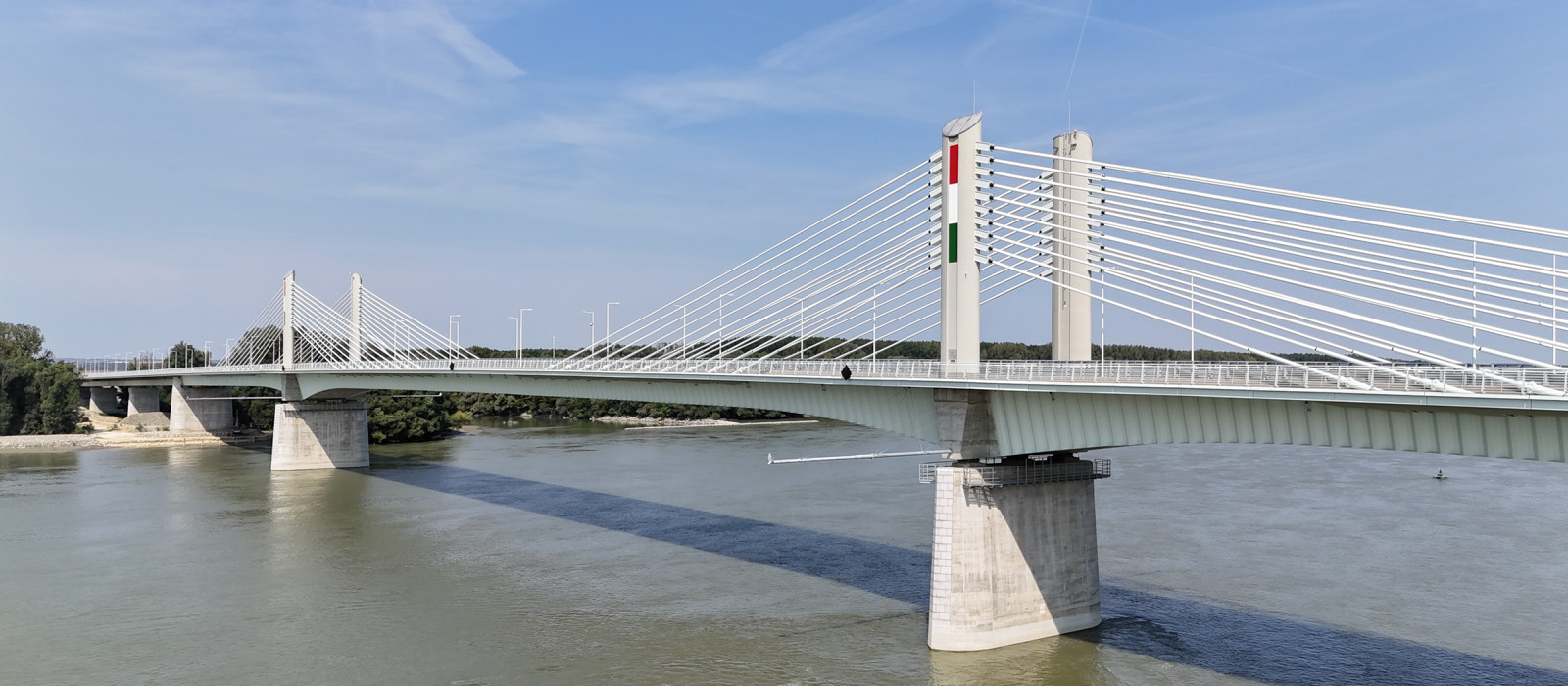
Hungary has more than twenty thousand pedestrian, bicycle, road and railway bridges, operating under very different conditions and in highly varied technical states. Their design, construction and maintenance require special expertise, extensive experience and a distinctive engineering mindset, even within the construction industry. Engineers specialising in bridges are simply called bridge engineers; perhaps the most renowned Hungarian professional workshop in this field is CÉH zRt. Among the company’s achievements are the Megyeri Bridge and numerous motorway bridges across the country, and most recently the design of the Tomori Pál Danube Bridge between Kalocsa and Paks, for which they received the 2025 MAGÉSZ Steel Structure Award. In addition to the New Danube Bridge in Budapest—already completed at tender design level—CÉH zRt. also contributed to the design of the Chain Bridge’s renovation.
Alongside major and spectacular projects, they carry out numerous lesser-known but highly important tasks for traffic and operations in Hungary and abroad, supported by an extensive network of partners. The everyday work and challenges of the bridge design profession are presented by Péter Kolozsi, Head of the Bridge Design Department at CÉH zRt.
Bridges play a special role not only in transport, but also in our symbolic thinking and collective self-perception. They are critical elements of infrastructure networks: their everyday presence usually goes unnoticed, but their absence is felt immediately—typically in the form of traffic jams, disruptions, detours, and ultimately public dissatisfaction. Their maintenance therefore requires heightened attention, expertise and responsible stewardship to ensure they serve their function safely, reliably and continuously for many decades.
Today, bridges are designed for a lifespan of one hundred years, but with proper and knowledgeable maintenance they can last for centuries. Many bridges built before the turn of the 20th century are still in intensive use. The 176-year-old Széchenyi Chain Bridge has been renovated, rebuilt and even destroyed over the course of history, yet as one of the nation’s foremost symbols it stands an excellent chance of serving another 150 years.
The history of every bridge is unique, and the CÉH bridge engineering team approaches the engineering tasks associated with them with passion and exceptional expertise.
The construction of a new bridge—or the renovation of a major historic bridge, like the Chain Bridge—begins with thorough preliminary research and a complex preparatory process. This is when the fundamental directions of design are defined: functional requirements, traffic and load capacities, the optimal location of the structure, and the environmental conditions in which it must be built and operated. Several design alternatives are prepared during decision-making: drawing on engineering experience and using today’s standard 3D BIM models, various technologies, materials and structures are tested both theoretically and virtually until the optimal solution emerges. This is followed by the development of the architectural form and visual design, the evaluation of possible construction technologies, and the consideration of operational and sustainability aspects. Once the decision is made, design begins, followed by construction and then at least a century-long operational phase.
Most of the above applies primarily to new bridges. The refurbishment of existing structures starts with a thorough condition and diagnostic assessment—one of the core areas of expertise of the CÉH Bridge Department. Regular inspections required by regulations determine how long a bridge can remain in service, when refurbishment or strengthening becomes necessary, and where the point lies beyond which continued use would be unsafe without intervention. In this field, beyond design knowledge, a deep understanding of bridge history and structural diagnostics is essential, as well as a high level of creativity to resolve the many unique and complex situations that arise. It is not uncommon for CÉH engineers to work in extraordinarily challenging environments, relying on special equipment or rope-access techniques during inspections.
In bridge maintenance, the principle “what you can do today for one unit of cost, you may only be able to do tomorrow for ten” is particularly true. Neglecting timely, preventive maintenance and minor refurbishments can multiply costs within just a few years. Renewing older bridges is crucial not only for reducing environmental impact, but also for protecting cultural heritage and honouring the engineers and communities whose efforts created these structures.
All bridge operators are aware of these facts, and bridges are inspected regularly under applicable technical regulations. Nevertheless, financial constraints often result in interventions taking place only at the very last moment—both in Hungary and abroad—requiring lengthy, expensive work and closures. With adequate funding and a responsible maintenance culture, this can be prevented, Hungary’s bridge stock can be properly maintained, and disasters like those seen in other countries in recent years can be avoided.
The article was published in the online edition of Műszaki Magazin on 10 December 2025.