Public Consultation in Investment Projects: From Risk to Common Ground
The success of a large-scale development never depends solely on the strength of its technical content, the quality of the design, or the availability of the necessary funding. These are, of course, essential foundations. But on their own, they are not enough.
A project can only move in the right direction if those directly or indirectly affected by it also understand its purpose. It is important for the local community, the municipality, professional stakeholders and the client side alike to see why the development is needed, what impacts it may have, and where they have a meaningful opportunity to express their views.
Public consultation is therefore not a mandatory step to be “ticked off” at some point near the end of the process. Rather, it is an important tool in project preparation and project management. It can help strengthen the social acceptance of a development, reduce the risk of later conflicts, and ensure that plans are better aligned, already at an early stage, with real environmental, urban and community needs.
Why has public consultation become especially important?
In recent years, the pace of life has accelerated significantly. This can also be felt in legislation, decision-making and the everyday practice of the construction industry. Processes have become faster, decision-making periods have shortened, and developments often begin under tight schedules.
As a result, less time is often available for public consultation in large-scale investment projects than would actually be needed. This, however, can easily backfire. If stakeholders do not receive clear information in time, if they do not understand the purpose of the development, or if they feel they have no real opportunity to have their say, this can quickly lead to distrust and resistance.
Yet the acceptance of a major development does not only influence the fate of that particular project. In the life of a settlement or urban district, the social foundations on which an investment is built may continue to have an impact even decades later.
Stakeholder analysis: identifying risks early
In the United States, stakeholder analysis is a widely used method in the preparation of major projects. Its purpose is to map all stakeholders of a project with the involvement of experts: those who support the development, those who are neutral, and, of course, those who are expected to have reservations about it.
The process, however, does not end with identifying the stakeholders. It is also necessary to assess how each stakeholder may influence the implementation of the project. A development launched in the face of strong social resistance can carry significant implementation, reputational and scheduling risks, especially if that resistance gains broader community support.
This is why public consultation does not begin at the end of a project, but already in the early stages of preparation. At a point when there is still genuine room for manoeuvre, and when feedback is not a source of retrospective debate, but a set of aspects that can support the design process.
Good examples of this can be found in urban development processes where the involvement of stakeholders was not a formal gesture, but a natural part of the project.
In the city centre of Newcastle, for example, an urban development project was implemented with outstanding success by involving local residents and professionals from the very first phase, with stakeholders even taking part in the work of the decision-making body. Initial cautious distance was gradually replaced by trust and active interest. As a result, the development area, originally involving fewer than one hundred blocks, eventually doubled in size.
A similarly instructive example is the joint development implemented across several settlements in the Neckar Valley. Instead of competing with one another for government funding, the settlements joined forces. They asked residents for their opinions and suggestions through several forums and formats, responded to these inputs, and incorporated them into the final programme. As a result, parallel developments were avoided, a rational division of tasks was created, and the programme could be implemented more cost-effectively.
Our professional experience
In our own professional field, we have also seen several times how much it matters when public consultation for a development takes place at the right time and in the right way.
The example of a large-scale development in Budapest clearly showed the consequences of involving stakeholders too late. If a genuine dialogue is not established in time between the client, the designers and the municipality, public resistance can easily strengthen through self-organisation. In such cases, even a development that appears to start with strong momentum can quickly encounter obstacles, slow down, or even require redesign.
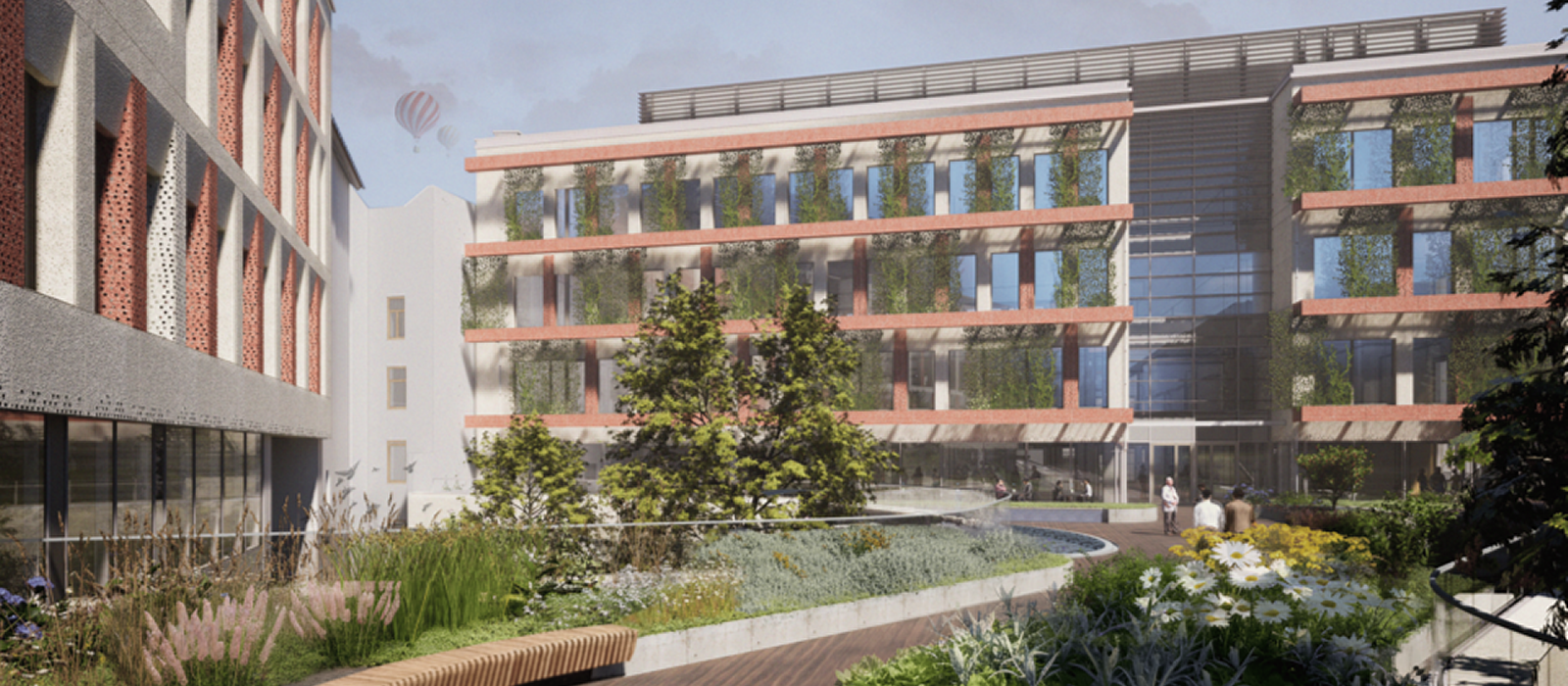
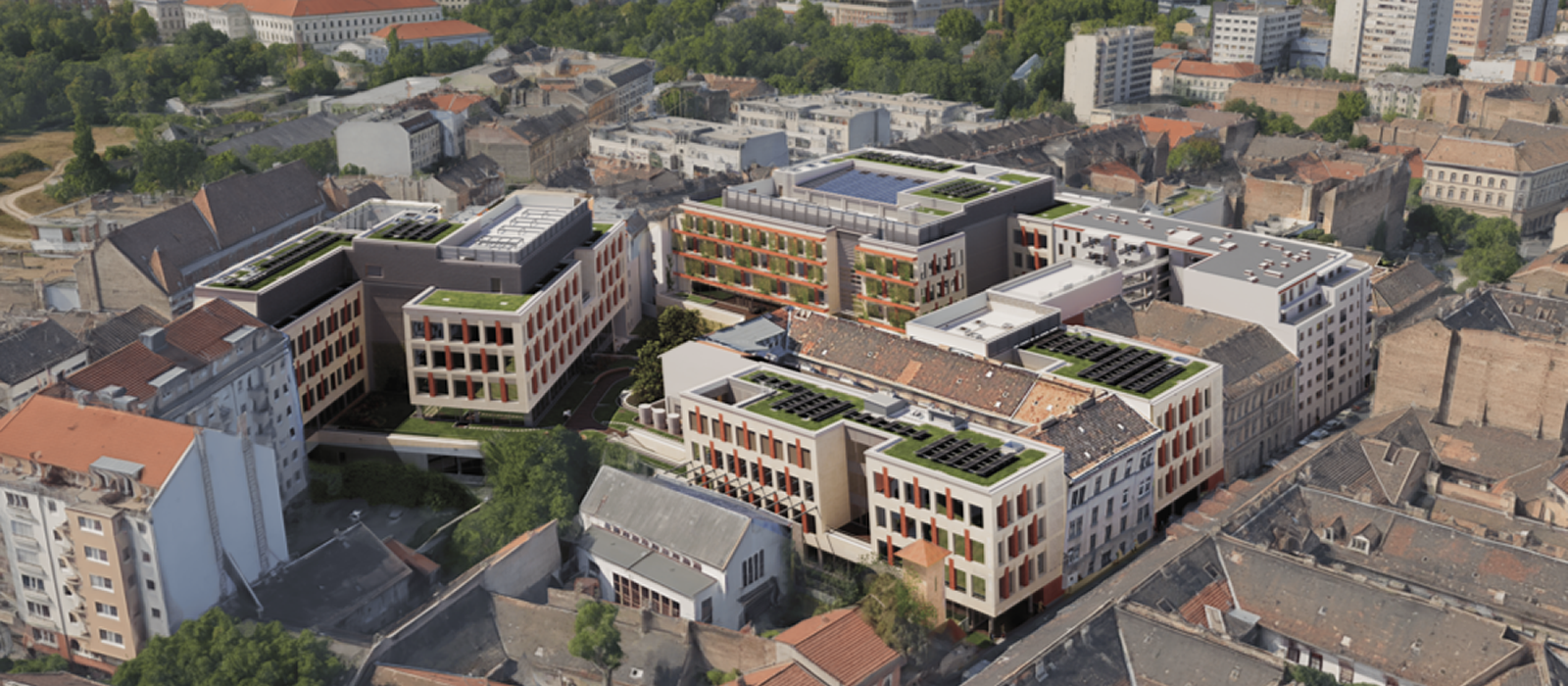
In the preparation of another university development, also in Budapest, we took part in a process where, instead of the demolition of a monumental urban block, the approach of block rehabilitation came to the fore. At the same time as the official launch, we contacted the chief architect of the local municipality to ensure that consultation would not become a retrospective explanation, but part of the thinking process.
Following several professional consultations, together with the client, we presented how the district’s requests and recommendations had been incorporated into the development concept. The plans were also presented to the district planning council; the recommendations received there were processed and then built into the designs. After this, together with the municipality, we prepared a public consultation process consisting partly of an online questionnaire and partly of in-person consultation.
It was particularly encouraging for us to see that the planned development received significant support among the affected residents. One of the most memorable moments of the consultation was when the representative of one of the residential buildings in the block asked, almost with disappointment, how their building could become an integral part of the project.
That sentence captured very precisely why it is worth giving time and attention to consultation. If the process is well prepared, public dialogue does not slow down an investment project; it makes it more stable. It does not take away from professional work; it strengthens it.
Incorporating feedback does not mean giving up professional considerations. Rather, it means refining them, reinforcing them and supporting feasibility.
How can we help?
As an engineering service provider, CÉH zRt. supports clients in projects from both the design and project management side. From the moment an idea is born, we are able to provide support to help ensure that the preparation of a development is professionally sound, well considered and socially more stable.
In this process, we do not only prepare technical content. We help align investor objectives, design possibilities, municipal considerations and stakeholder feedback.
As part of our support, we prepare and organise public consultation processes, take part in various forums, present development concepts in a clear and accessible way, process the feedback received, and quickly and flexibly channel suitable comments back into the plans.
Public consultation works well when it is not a retrospective explanation, but a consciously structured part of project preparation. When well prepared, it does not represent a risk; it creates a shared professional and trust-based foundation. A foundation on which the entire investment process can be built more securely.
Ákos Takács CÉH Inc.- Vice President, Chief Sustainability Officer