Galvani Bridge Design Competition
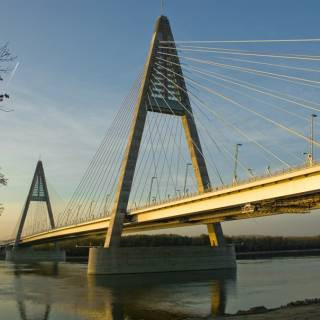
The proposed new Danube bridge along Galvani Road was intended to establish a direct road, rail-based public transport, pedestrian and cycling connection between South Buda and Csepel. The development aimed to improve Budapest's southern transport network and support urban development opportunities in the northern part of Csepel Island. We were invited to participate in the international design competition based on our experience gained in designing the Megyeri Bridge.
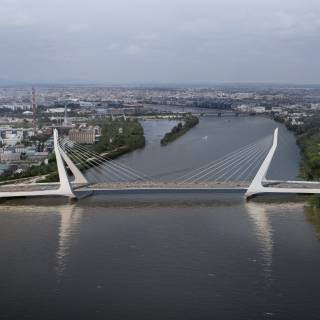
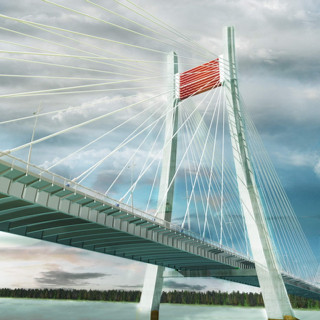
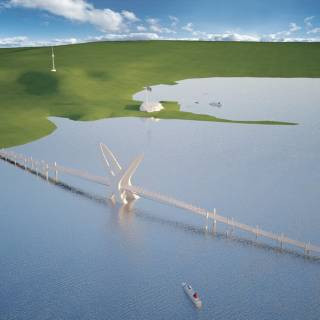
Our bridge engineering team developed an 803-metre-long, single-pylon cable-stayed bridge concept. The 465-metre-long main river bridge, designed with a steel box-girder cross-section, would have been connected to steel–concrete composite approach bridges on both sides. In developing the structural concept, we focused on efficient material use, minimising steel consumption and achieving an aesthetically appealing design. Due to the different connection points on the two riverbanks, the bridge would have crossed the Danube at an angle, with its river piers aligned with the direction of the current. The arrangement of the supports also had to accommodate the international navigation channel and ensure access to the Csepel Free Port.
The defining architectural feature of the concept was a 117-metre-high, branching pylon positioned closer to Csepel. Its distinctive form symbolised both the connection between the two parts of the city and the division of the Danube into two branches around Csepel Island. The curved lines of the pylon, the slender steel bridge structure and the cladding with concealed decorative lighting would have given the crossing a distinctive appearance, complementing Budapest's cityscape.
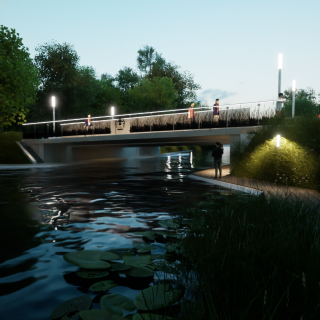
A particular feature of the bridge design was its ambition to offer pedestrians a new urban experience beyond simply crossing the river. We designed widened walkways and cantilevered viewing platforms extending over the Danube near the pylon. The two platforms would have been connected by a passage beneath the bridge, partially enclosed by perforated metal cladding, offering unique views of the river and the pylon structure. Our competition entry demonstrates how we combined economical bridge engineering solutions, distinctive architectural design and opportunities for public use.
Related project:[Galvani Bridge – Permitting and Tender Design of the Winning Concept